12 Oct 2026
Congested Midweek Schedules: Statistical Insights into Soccer Betting Shifts

Midweek fixture congestion creates measurable shifts in team performance metrics that reshape how betting markets price outcomes across European and global competitions. Data from domestic leagues and continental tournaments show that clubs playing three or more matches within seven days experience consistent declines in key indicators such as distance covered, high-intensity sprints, and pass completion rates in the second half of the week.
Performance Metrics Under Pressure
Researchers tracking squad rotation patterns note that teams with limited bench depth post lower expected goal values when matches fall on Tuesdays or Wednesdays following weekend league action. European Professional Football Leagues reports indicate that home sides in midweek slots record fewer shots on target on average compared to their weekend equivalents, while away sides concede more set-piece opportunities after short recovery periods. These patterns feed directly into market movements where bookmakers adjust totals lines and handicap margins ahead of kickoff.
Market Reactions to Congestion Data
Betting operators integrate player workload statistics from sources such as Opta and Wyscout to recalibrate odds on both match result and goal-line markets. When fixture lists show back-to-back away games for a side, markets tend to price higher probabilities for under 2.5 goals because defensive structures tighten while attacking transitions slow. Observers tracking these adjustments across multiple seasons find that over 2.5 goal lines move more frequently in congested periods because fatigue-related errors increase the likelihood of late concessions.
One analysis of Champions League group-stage matches played midweek revealed that teams traveling across time zones recorded win percentages dropping by double digits relative to their domestic form. Such figures prompt sharp bettors to target draw no bet selections or Asian handicap lines favoring the fresher opponent, especially when the congested side fields a rotated lineup.
Regional Variations in Scheduling Impact
Leagues in northern Europe with denser winter calendars display sharper statistical drops in clean sheet percentages during midweek rounds than southern competitions that spread fixtures more evenly. Bundesliga clubs, for instance, often manage squad resources through early substitutions, which correlates with higher rates of goals scored after the 70th minute in Thursday fixtures. In contrast, Serie A sides show steadier defensive records across congested periods because coaching staffs prioritize recovery protocols between matches.
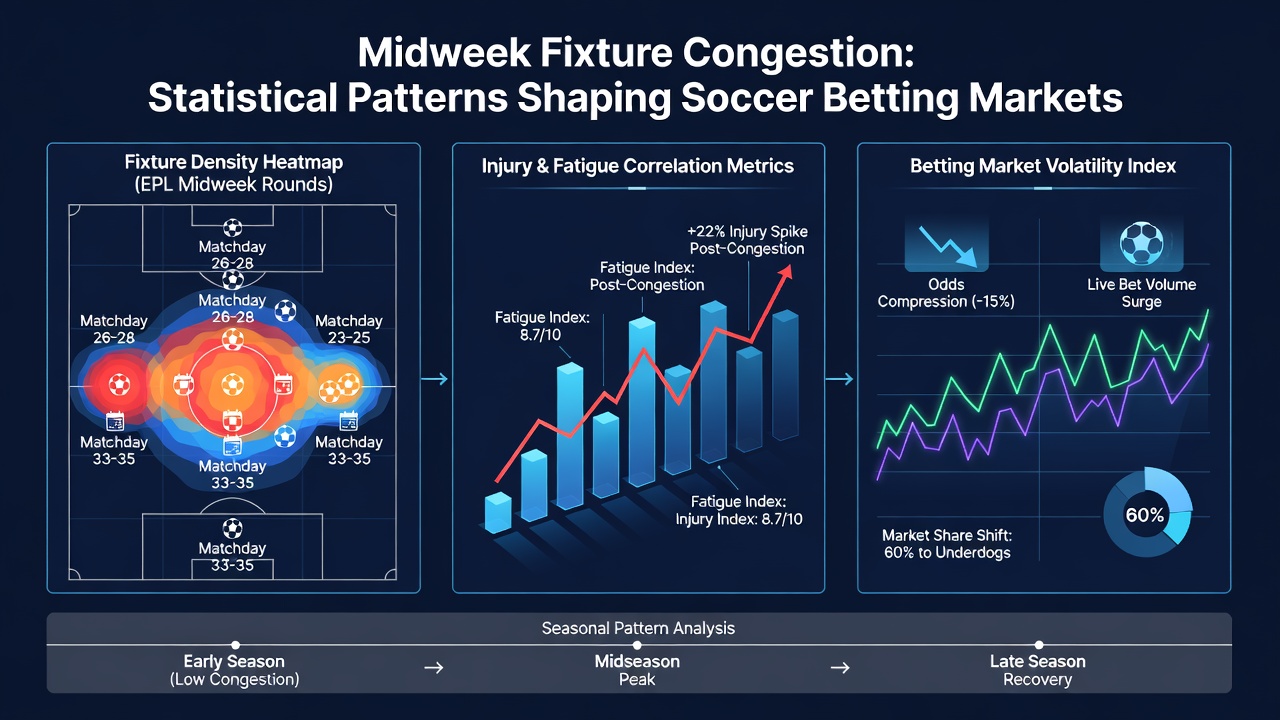
October 2026 schedules already list several clusters where Premier League sides face domestic cup ties sandwiched between league weekends and European nights. Historical datasets covering similar October blocks demonstrate that total goals markets trend lower when the same players feature in all three competitions within eight days. Markets respond by shading both team totals and player prop lines downward for high-minute performers.
Accumulator and Live Betting Adjustments
Accumulator builders who factor congestion into selections often avoid overs on teams with short rest windows and instead favor clean sheet or under markets for sides that rotate effectively. Live betting platforms reflect these realities faster because in-play data streams capture declining sprint counts and increasing turnovers as matches progress. Bettors monitoring these signals gain edges when second-half lines drift in response to visible fatigue.
Academic work from sports science departments at institutions across Europe and Australia has quantified how recovery time below 72 hours elevates injury risk and reduces shot creation. These studies supply additional layers of context that sophisticated traders incorporate when modeling midweek outcomes.
Conclusion
Statistical patterns tied to midweek fixture congestion continue to influence soccer betting markets through measurable changes in team output and market pricing. Clubs, analysts, and operators all track the same workload indicators that produce predictable movements in totals, handicaps, and player props. As calendars grow more crowded, those monitoring rotation trends and recovery data maintain consistent access to the edges these patterns generate.