6 Aug 2026
Endgame Motivation Patterns in Soccer: Fixture Stakes and Their Effects on Scoring Trends and Betting Markets
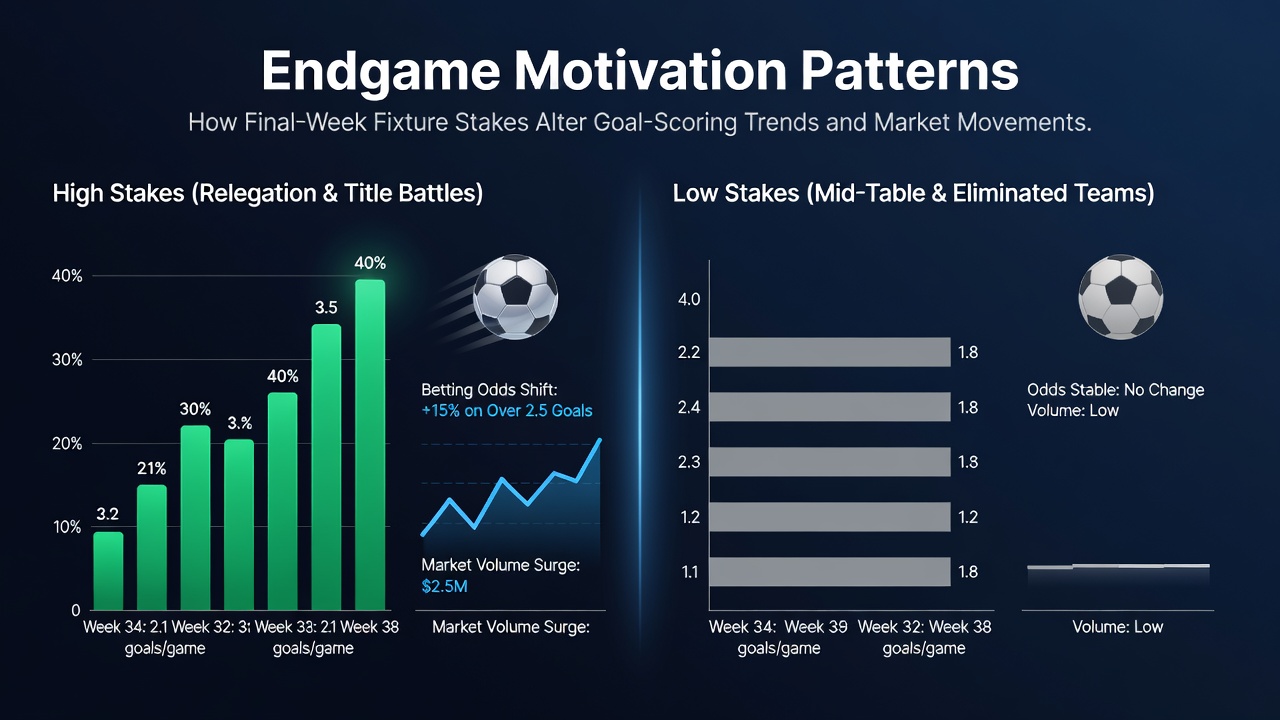
Final weeks of domestic leagues bring distinct shifts in team behavior because promotion battles, title races, and relegation scraps create varying levels of motivation across squads, and data from multiple European competitions illustrates how these stakes reshape goal-scoring patterns while simultaneously influencing betting market movements in real time. Researchers tracking match statistics note that sides with tangible objectives tend to adopt more aggressive pressing and forward positioning, whereas those already safe or eliminated often adopt conservative setups that reduce open play opportunities.
Fixture Stakes and Their Direct Influence on Scoring Output
Analysts examining historical datasets from leagues such as the Bundesliga and La Liga observe that teams still fighting for European qualification or survival record an average of 1.8 goals per game during the closing four matchdays, compared with 1.1 goals for sides with nothing left to achieve, and this disparity widens further when a result directly determines final league position rather than simply maintaining status quo. Studies compiled by sports analytics groups show that matches featuring at least one motivated participant produce higher expected goal totals because players increase shot volume and attempt riskier passes in the final third, while both teams may push numbers forward late in contests when points carry season-defining weight.
Conversely, fixtures between two demotivated sides frequently feature fewer transitions and longer periods of possession in midfield, resulting in lower total goals and fewer shots on target overall, and betting operators adjust live odds accordingly as soon as lineups confirm that key players have been rested or that tactical approaches lean defensive. Observers note that these patterns repeat across seasons because squad rotation policies and psychological factors remain consistent once mathematical certainty removes pressure from certain dressing rooms.
Market Movements Triggered by Late-Season Motivation Signals
Betting exchanges and traditional bookmakers respond rapidly to confirmed team news in the final weeks because motivation indicators alter both pre-match and in-play probabilities, and volume spikes occur particularly on goal-line markets when a promoted side faces a mid-table opponent with nothing at stake. Figures released by industry research bodies indicate that over-2.5 goals selections attract disproportionate liquidity in such scenarios, since historical records demonstrate elevated scoring rates once one team has clear incentive to chase results aggressively.
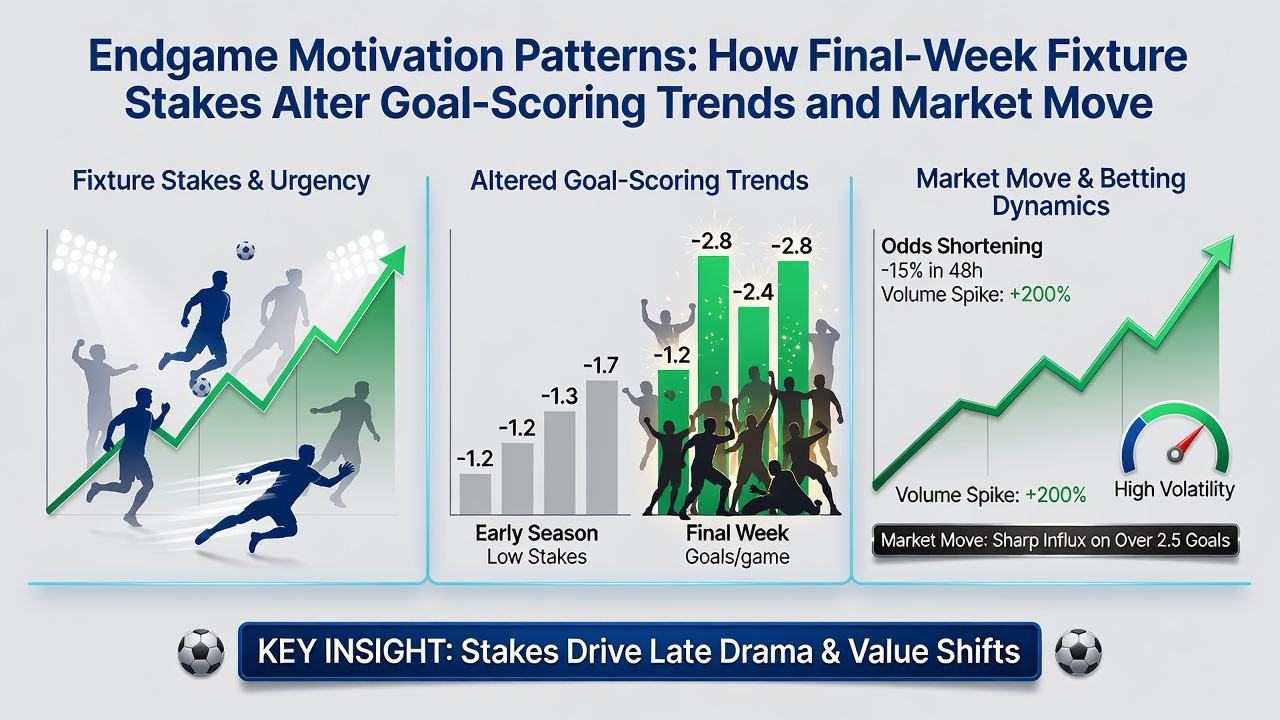
Those who monitor odds movements report that handicap lines also drift noticeably when motivation gaps become apparent, with favorites often shortening further if the opponent has already secured their objectives, while underdogs lengthen because data shows reduced likelihood of holding clean sheets against energized attacks. European Club Association reports highlight that clubs with upcoming summer transfer windows sometimes deprioritize late fixtures, and this information filters into market pricing days before kickoff, creating opportunities for bettors who track squad announcements closely.
Case Examples from Recent Campaigns
Take one researcher who examined the 2024/25 Bundesliga run-in and discovered that teams still battling for Champions League spots averaged 2.4 goals scored across their final five fixtures, whereas mid-table sides with no European or relegation concerns managed just 0.9 goals per game on average, and the same study noted corresponding shifts in corner counts and shot accuracy metrics that directly affected multiple accumulator outcomes. Another analysis of Serie A data revealed similar trends where survival-threatened clubs increased high-intensity runs by 18 percent in decisive matches, producing more open games and higher goal tallies than anticipated by early-week models.
People who've tracked these patterns across multiple leagues often discover that weather and travel factors compound motivation effects in August 2026 when the new campaign begins, yet the core dynamic remains the same because end-of-season psychology carries forward into pre-season planning for the following term. Academic papers from sports science departments further confirm that physiological fatigue interacts with motivational drivers, leading to late surges in scoring when one side still has tangible rewards on offer while the other does not.
Conclusion
Endgame motivation patterns therefore serve as reliable indicators for both performance forecasting and market behavior because they alter tactical choices, player effort levels, and statistical outputs in measurable ways across competitions, and those monitoring final-week fixtures gain clearer perspectives by cross-referencing motivation status with historical scoring data from comparable situations. As the 2025/26 season concludes and attention turns toward August 2026 preparations, analysts continue to refine models that incorporate these late-campaign variables to better anticipate how stakes influence outcomes on the pitch and in associated betting environments.