14 Sep 2026
International Windows Reshaping Domestic Squads: Availability Patterns and Result Probability Adjustments
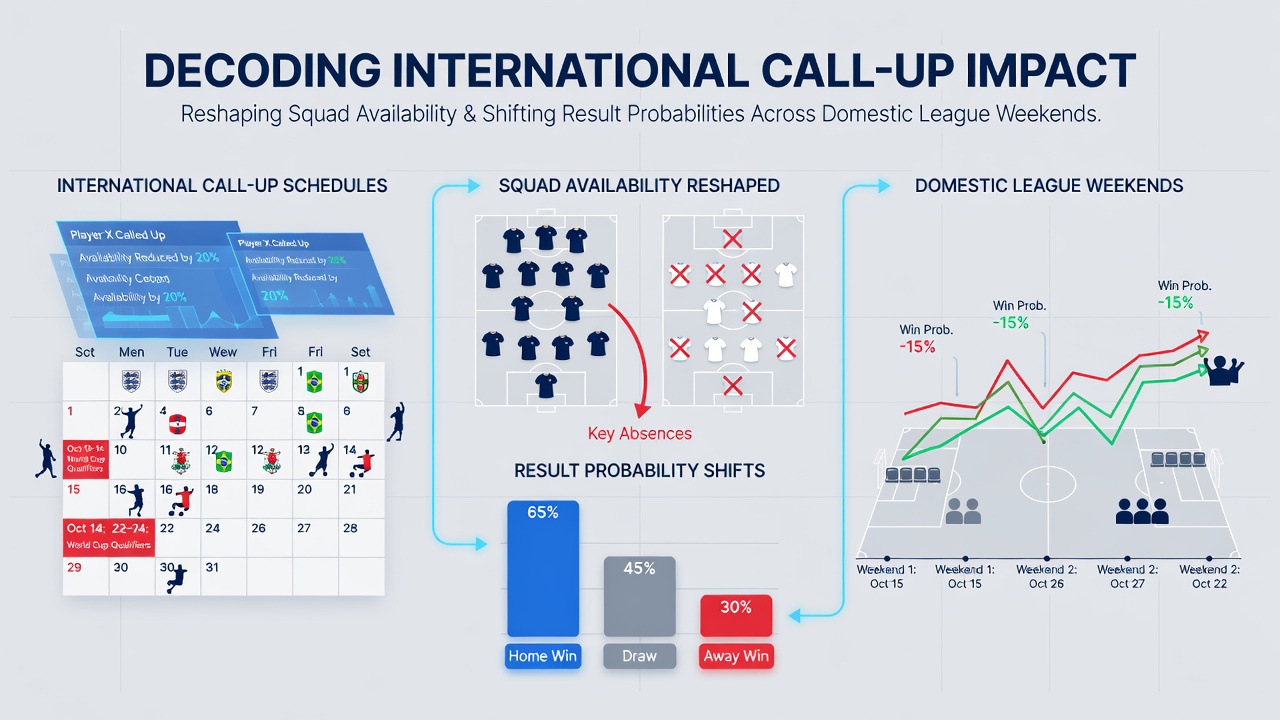
International match calendars create recurring disruptions for club sides as national teams select players during designated FIFA windows, which in turn alters squad compositions ahead of domestic league fixtures and modifies statistical likelihoods for various outcomes. These periods, scheduled multiple times each season, pull key personnel away from their clubs for preparation and matches, leaving managers to adjust lineups with reduced options in defense, midfield, and attack.
Calendar Structure and Timing Effects
FIFA maintains a fixed international match calendar that clusters games into specific blocks, typically spanning nine or ten days and occurring roughly every six to eight weeks during the season. Data from league records indicate that clubs in top European competitions lose an average of three to six first-team players during these windows, with the exact number varying by squad nationality distribution and player form. September 2026 features one such window running from late August into early September, overlapping with early domestic rounds and forcing teams to navigate fixture congestion without full rosters.
Observers note that the timing matters because recovery periods between international duty and club matches shrink, while travel demands increase fatigue. European leagues report higher rates of minor injuries post-window, according to injury surveillance reports compiled by medical staff associations across multiple countries.
Squad Availability Adjustments
Teams with larger international contingents experience the sharpest drops in depth, whereas clubs relying on domestic talent retain more continuity. Research from sports analytics groups shows that Premier League sides average four absences per international break, compared with slightly lower figures in leagues such as Serie A or Bundesliga where squad compositions differ. Managers respond by promoting academy players or recalling loanees, yet performance metrics from those replacements often diverge from established starters in areas like passing accuracy and defensive positioning.
Coaches in leagues across North America and Australia have documented similar patterns, where national team commitments reduce options during overlapping domestic schedules and require rapid tactical shifts.
Statistical Shifts in Match Probabilities
Historical match data reveal measurable changes in result distributions during the first weekend after an international window. Win rates for sides missing multiple starters decline by roughly 8 to 12 percent in aggregated league statistics, while draw frequencies rise modestly. Goal-scoring outputs also trend lower when attacking personnel are absent, with studies from university sports science departments indicating average goal totals drop between 0.3 and 0.5 per game in affected fixtures.
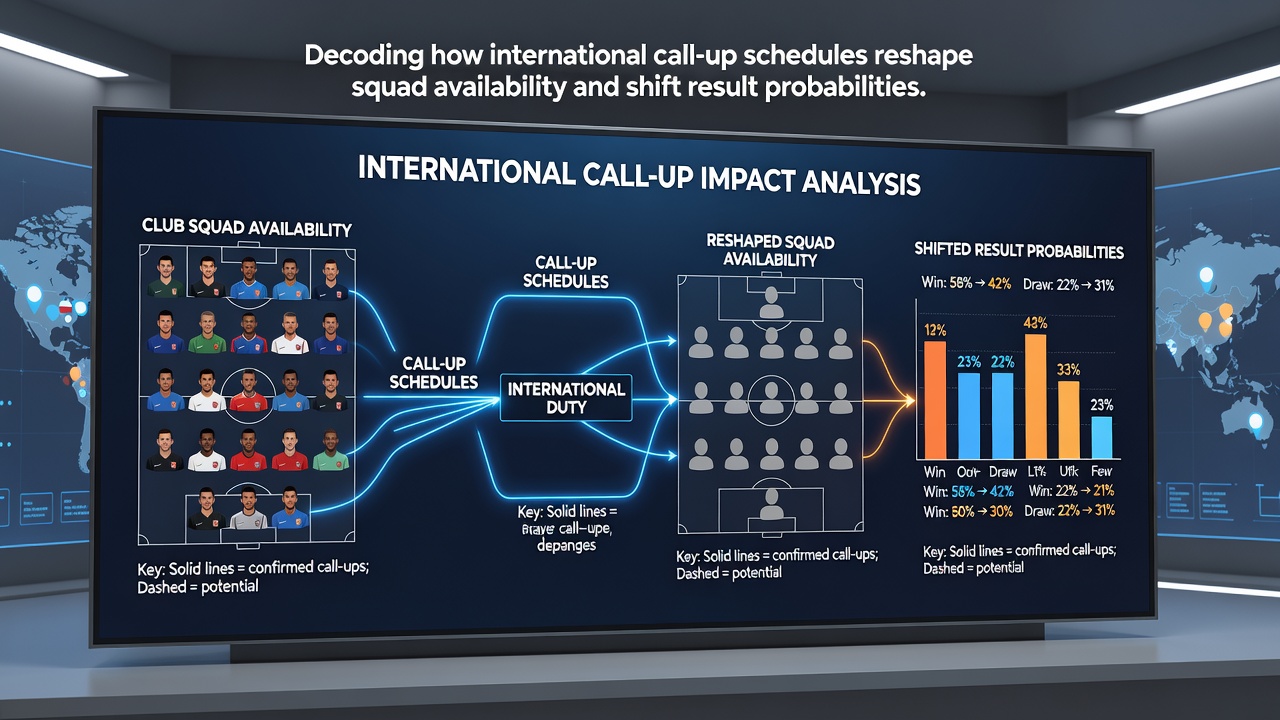
Betting markets adjust odds accordingly, reflecting updated availability lists released by clubs midweek. Analysts tracking these movements across multiple seasons find that home teams without key players show reduced margins against mid-table opponents, whereas away sides sometimes benefit from lower expectations that allow for more organized defensive setups.
League-Specific Examples and Data Trends
One case from the 2024-25 season involved a top-flight club that lost its primary striker and two central defenders to national duty, resulting in three consecutive matches with altered formations and a measurable uptick in conceded set pieces. Comparable situations appear across continents; Canadian and Australian domestic competitions report parallel availability constraints when national team windows coincide with league weekends. Aggregated figures from European governing bodies show that matches immediately following September breaks produce fewer clean sheets than season averages, while midweek recovery time influences subsequent weekend outcomes.
Researchers compiling multi-league databases have identified consistent patterns where teams with greater squad rotation options mitigate the effects more effectively than those with thinner benches. These adjustments feed directly into probability models used by performance analysts and data platforms.
Longer-Term Implications for Planning
Clubs now incorporate international calendars into preseason planning, signing players with fewer national commitments or building depth in positions frequently depleted. Regulatory bodies outside the UK, including agencies in the United States and the European Union, track these dynamics through competition integrity reports that highlight how fixture scheduling interacts with player welfare standards.
Academic papers examining five-year datasets confirm that repeated exposure to these cycles correlates with higher usage of substitute rotations and tactical flexibility requirements. Teams that adapt early in the window period maintain closer alignment with pre-break performance baselines.
Conclusion
International call-up schedules continue to influence domestic league weekends through direct effects on squad availability, which in turn modify observed result probabilities across competitions. Data compiled from multiple seasons and regions demonstrate measurable, repeatable shifts that clubs, analysts, and performance teams monitor closely when preparing for post-window fixtures. As calendars evolve, these patterns remain central to understanding how global commitments reshape local outcomes.