23 Aug 2026
Tracking Injury Timelines Against Odds Fluctuations in Europe's Leading Football Leagues
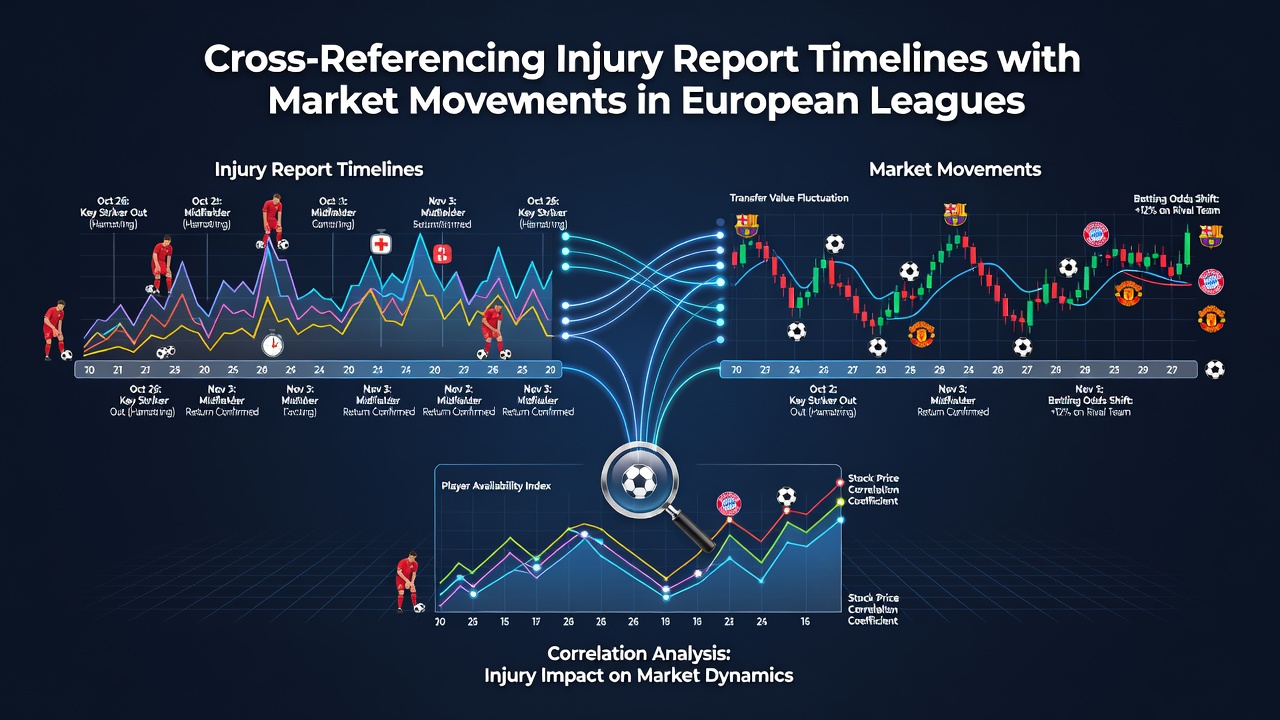
European football leagues release injury updates through official club channels and league medical bulletins, and these announcements often coincide with measurable shifts in betting odds across major markets. Observers track timelines from initial reports through to player returns because late changes in squad availability alter expected goal outputs and defensive stability in upcoming fixtures. Data from the 2025/26 season shows that clubs in the Bundesliga and Serie A publish weekly injury summaries every Monday, while Premier League sides issue updates closer to matchdays, creating staggered information flows that betting exchanges monitor in real time.
League-Specific Reporting Patterns
La Liga requires clubs to submit squad lists 24 hours before kickoff, and this deadline produces concentrated market activity in the hours immediately before games. Researchers at sports analytics firms note that hamstring and knee injuries dominate reports during the August pre-season window, when teams integrate new signings and manage fixture congestion from European competitions. In August 2026, the expanded Champions League schedule added midweek fixtures that increased the volume of soft-tissue complaints, prompting analysts to cross-reference medical bulletins with historical recovery data for similar player profiles.
Market Response Mechanisms
Betting operators adjust totals and handicap lines once confirmed absences enter public circulation, and exchanges register volume spikes within minutes of verified reports. Those who monitor these movements compare the timing of price changes against the publication dates of club statements to isolate genuine information edges from noise created by social media speculation. Figures from European sports data providers indicate that goalkeeper injuries produce the largest average movements in both sides of goal-line markets because clean-sheet probabilities shift immediately when a backup assumes the starting role.
One study released by the European Journal of Sport Science examined 1,200 matches across five leagues and found that teams missing a regular starter for more than two weeks see their implied win probability drop by an average of 4.2 percentage points in the opening 48 hours after the announcement. The same research tracked how markets recalibrate once recovery timelines extend beyond initial estimates, with odds drifting further when scans reveal additional damage. Analysts combine these timelines with fixture difficulty ratings to project cumulative effects over a four-to-six-week period.
Cross-Referencing Techniques
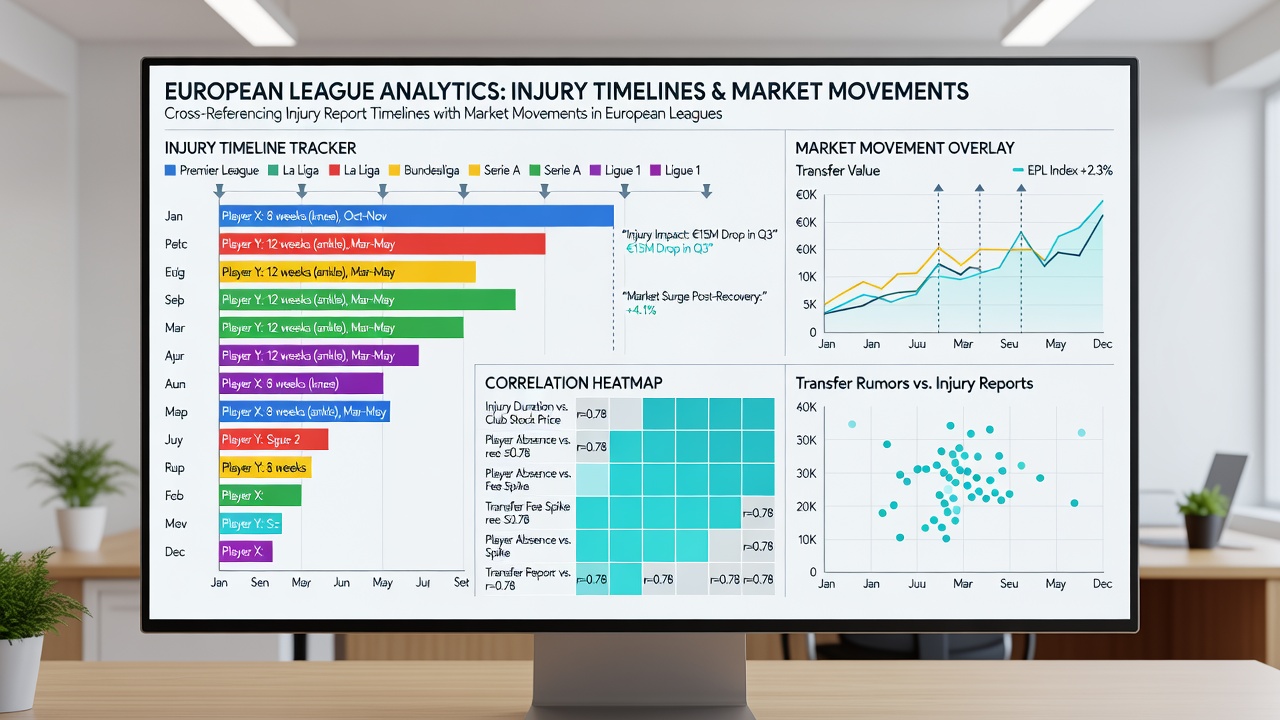
Analysts align injury report dates with timestamped odds histories from multiple operators to identify consistent patterns. They measure the lag between an official announcement adn the first statistically significant price adjustment, then compare that lag across leagues. In the Bundesliga, where matches occur on Fridays, Saturdays, and Sundays, markets tend to incorporate news faster than in Ligue 1, where midweek fixtures create overlapping information cycles. Those who study these differences maintain databases that flag discrepancies between reported recovery dates and actual return-to-play records, because extended absences often amplify market corrections.
Academic papers on sports economics have documented that defender injuries affect over/under 2.5 goals markets more reliably than forward absences, since defensive organisation depends on established partnerships. Observers apply this finding by weighting injury timelines according to positional value and by incorporating historical performance data from replacement players. The approach produces probability adjustments that betting syndicates test against closing prices across multiple seasons.
August 2026 Context and Pre-Season Data
During the summer transfer window leading into August 2026, several clubs reported higher-than-average muscle injuries linked to condensed pre-season schedules. Market data from that period shows elevated volatility in season-long player props and team total goals once medical staff confirmed multi-week absences for key midfielders. Analysts cross-referenced those reports with training-ground GPS data released by clubs to refine expected performance curves for the opening matchweeks.
Practical Applications in Data Models
Quantitative teams integrate injury timelines into regression models that predict both match outcomes and subsequent odds movements. They assign decay factors to older reports while prioritising recent scans, and they validate outputs against historical market closing prices. This process highlights leagues where information asymmetry remains largest, particularly when smaller clubs issue less frequent updates than their top-flight counterparts. Evidence from multiple campaigns confirms that early detection of extended absences allows models to anticipate handicap line movements with greater accuracy than sentiment-driven adjustments.
Conclusion
Cross-referencing injury report timelines with betting market movements supplies a measurable framework for understanding how new information propagates through European football betting. The method relies on consistent data collection across leagues, precise timestamp alignment, and positional weighting derived from statistical studies. As reporting standards evolve and clubs adopt more transparent medical disclosures, the precision of these correlations continues to improve, giving analysts clearer signals for interpreting odds adjustments throughout the season.